Mulled Wine: Warm, Cozy Design Assets for Winter
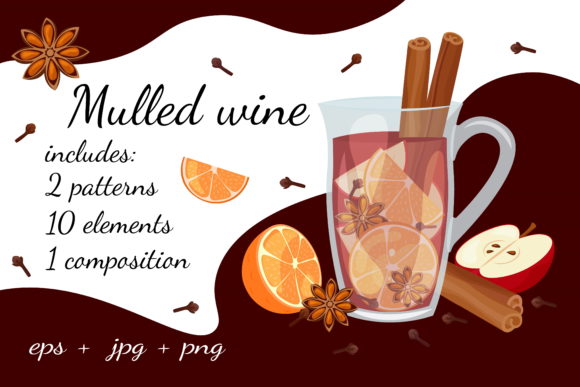
There’s a quiet magic in the way Mulled Wine transforms a design—just like the drink itself, it carries warmth, depth, and quiet celebration. But this isn’t a font. It’s a carefully crafted illustration collection: two distinct patterns, a rich mulled wine composition, and an isolated mug element—all designed to evoke the tactile comfort of winter evenings, crackling fires, and shared moments.
The visual language is intentional: deep burgundy and amber tones, soft shadows, subtle steam curls rising from ceramic, and delicate spice accents—cinnamon sticks, star anise, orange peel—rendered with gentle realism. Nothing feels overly stylized or cartoonish. Instead, the illustrations balance authenticity with design flexibility. They’re warm without being saccharine, detailed without sacrificing scalability, and nostalgic without leaning into cliché.
This collection works because it understands context. Designers reach for Mulled Wine when they need to signal seasonality—not just “winter,” but the feeling of it: slower pace, sensory richness, human connection. That makes it especially effective for food blogs planning holiday roundups, small-batch cider or honey brand packaging, artisanal candle labels, or editorial spreads in lifestyle magazines covering slow living and seasonal rituals.
Where These Illustrations Truly Shine
Mulled Wine isn’t built for every use—but where it fits, it elevates. Think of it as a design ingredient, not a universal tool.
- Food & beverage branding: A café launching a limited-edition spiced cider menu? The isolated mug element anchors social media graphics and in-store signage with instant recognition and mood.
- Editorial and publishing: A cookbook focused on seasonal entertaining benefits from the full composition pattern as a chapter divider or section header—adding texture without competing with typography.
- Digital storytelling: Bloggers and content creators use the EPS and AI files to layer elements over photos—say, placing the mug over a blurred background of snow-dusted pine boughs for a newsletter banner.
- Packaging and print: At 300 dpi in both JPG and PNG, the assets hold crisp detail on product tags, gift box wraps, or recipe cards—even at small sizes (down to 2.5 cm wide).
- Marketing campaigns: The two patterns offer versatility: one works as a subtle background for email headers; the other, more intricate, serves as a focal border for holiday sale announcements or limited-run product drops.
What sets Mulled Wine apart from generic “winter” vectors is its restraint. There are no snowflakes, no reindeer, no glitter. Its personality comes from materiality—the weight of the mug, the translucence of wine, the grain of wood beneath it. That specificity builds trust. Viewers don’t just see “winter”—they recognize a moment they’ve lived.
Practical Integration: What You’ll Actually Use
You receive four file types: AI (fully editable layers), EPS (scalable for print workflows), JPG (ready for web use or quick mockups), and PNG (with transparent background—ideal for digital overlays). All are 300 dpi, meaning they scale cleanly from business cards to wall-sized retail displays.
Start by opening the AI file. Notice how each element—mug, steam, spices—is on its own layer. That means you can mute the cinnamon stick if your brand avoids spice imagery, or adjust the steam opacity to match lighting in a photo composite. The EPS version preserves that structure for designers using Affinity or CorelDRAW. And because the PNG has transparency, you can drop the mug directly onto a gradient background in Canva or Figma without clipping masks.
For print projects, test the JPG and EPS side-by-side on a physical proof. You’ll likely find the EPS renders more consistently across RIPs (raster image processors), especially with fine details like steam wisps. For digital-only work, the PNG often delivers faster load times and smoother blending—particularly in email clients that don’t support SVG.
Designing With Intention, Not Just Aesthetics
Mulled Wine doesn’t ask to be the hero of every layout—and that’s its strength. Used thoughtfully, it supports hierarchy rather than disrupting it. Place the isolated mug beside a headline about “slow sipping traditions,” and the illustration becomes a visual pause—a breath before the text. Layer the pattern subtly behind body copy in a PDF recipe guide, and it adds rhythm without compromising readability.
That said, avoid overloading. One element per layout usually lands best. Two mugs? Too literal. A pattern background *and* the full composition in the same banner? Visual noise. Let the warmth breathe. In branding, consistency matters more than variety: use the same mug orientation and color treatment across all touchpoints—website, Instagram Stories, printed menus—so viewers subconsciously associate that specific rendering with your voice.
If you’re pairing Mulled Wine with typography, lean into contrast. A clean, neutral sans serif (like Inter or Work Sans) grounds the warmth without competing. Avoid decorative or high-contrast serifs—they clash with the organic softness. For handwritten accents—say, a tagline like “simmered with care”—choose a script with gentle pressure variation, not sharp terminals. The goal isn’t to mimic the illustration’s texture, but to complement its emotional tone.
Licensing, Realism, and Respectful Use
This is a commercial collection: you may use it in client work, sell products featuring the illustrations (e.g., mugs, tote bags, greeting cards), and include them in templates you license—no attribution required. But it’s not a blanket license. You can’t resell the AI or EPS files as standalone assets, nor claim authorship of the original artwork.
More importantly, consider cultural resonance. Mulled wine appears across Europe—from glühwein in Germany to vin chaud in France—with regional variations in spices, serving vessels, and tradition. If your project references a specific heritage, treat those details with care. Using the mug element alongside Bavarian folk motifs? Ensure the overall treatment honors context—not just aesthetics.
Finally, remember: warmth isn’t just visual. It’s felt in pacing, spacing, and silence. Mulled Wine gives you the tools—but the atmosphere you build depends on how quietly, intentionally, and respectfully you place them.