Bulldog Clipart: Strategic Visual Assets for Purpose-Driven Design
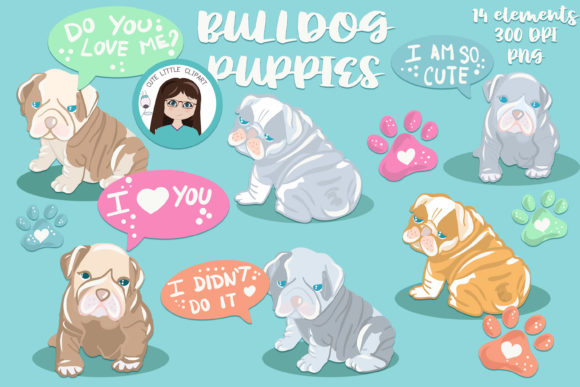
Bulldog Clipart isn’t just a collection of cute dog illustrations—it’s a purpose-built visual resource with measurable utility across creative, commercial, and educational workflows. The specific set you’re considering—14 high-resolution (300 DPI), 10 × 10 inch PNG files with transparent backgrounds—offers technical consistency and production readiness. That matters because resolution, transparency, and uniform sizing directly impact scalability, print fidelity, and integration speed. When your goal is to ship polished mugs, embroidered apparel, or classroom materials without last-minute raster fixes or background removal, these attributes reduce friction—not just in design, but in decision-making, timelines, and client trust.
Why Intentional Use of Bulldog Clipart Outperforms Random Selection
Using Bulldog Clipart without clear goals often leads to visual dilution—not differentiation. A bulldog on a birthday card feels generic if it doesn’t reflect the recipient’s personality, the brand voice of the sender, or the emotional tone of the occasion. But when selected deliberately—as part of a broader communication strategy—it becomes a lever. For example, an educator printing school-related items might choose a calm, bespectacled bulldog clipart for a “Reading Buddies” poster to reinforce approachability and focus. A small-batch apparel brand could pair the same bulldog with hand-drawn typography and muted tones to signal quiet confidence—not cartoonish energy. The clipart itself doesn’t carry meaning; context, placement, colour treatment, and adjacent messaging do. Your job isn’t to find *a* bulldog—it’s to align *the right* bulldog with a defined outcome.
Strategic Use Cases with Real-World Impact
- Cards & Personalised Digital Cards: These aren’t just greetings—they’re touchpoints. A personalised birthday card using Bulldog Clipart gains authenticity when the bulldog mirrors the recipient’s pet, hobby (e.g., wearing a tiny graduation cap), or inside joke. For digital cards, transparency ensures clean layering over custom gradients or photo backdrops—no awkward white boxes undermining polish.
- Mugs, Posters & Home Decor: At 300 DPI and 10 × 10 inches, each Bulldog Clipart file scales crisply to standard mug wraps (typically 8–9 inches wide) and A3/A2 posters. That means no pixelation at retail size—and no need to pay for custom illustration when consistency and clarity are priorities. For home decor, consider how repetition builds recognition: a series of three bulldogs in varying poses across framed prints creates rhythm without monotony.
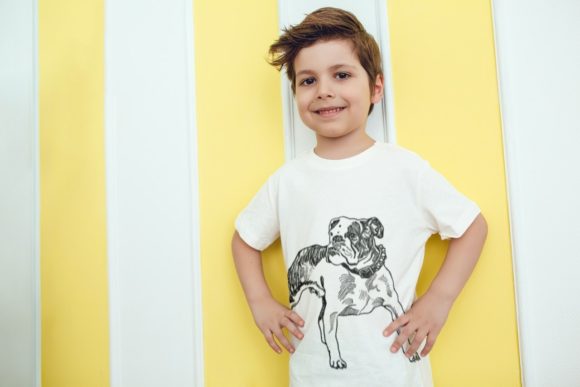
- Clothing & Embroidery Patterns: Here, simplicity and silhouette matter most. Bulldog Clipart with clean outlines and minimal internal detail translates more reliably to stitch files. Before sending to embroidery software, test one clipart at 3–4 inches wide—the optimal chest-pocket size—to confirm legibility of ears, wrinkles, and jawline. If details vanish, choose a variant with bolder contours.
- Keyrings & Craft Projects: Laser-cut keyrings demand vector-ready edges—but since these are high-DPI PNGs, they work well when imported into vector editors (like Illustrator or Inkscape) for trace-and-refine workflows. For scrapbooking, layer Bulldog Clipart over textured paper scans or watercolour backgrounds; the transparent base preserves depth and tactility.
- Printed School & Learning Materials: Educators use visual anchors to support memory and engagement. A bulldog mascot on a multiplication chart or classroom job board isn’t decorative—it’s cognitive scaffolding. Consistency across materials (same bulldog across worksheets, display banners, and digital slides) reinforces familiarity and reduces cognitive load for learners.
What to Consider Before Integrating Bulldog Clipart Into Your Workflow
Technical readiness alone doesn’t guarantee strategic value. Ask yourself three questions before downloading or deploying:
- Does this align with my audience’s expectations—not mine? A law firm’s holiday card featuring playful Bulldog Clipart may undermine authority unless paired with restrained layout, serif typography, and deep navy/gold tones. Conversely, a children’s tutoring service gains warmth and approachability from the same asset—if used alongside age-appropriate spacing and friendly language.
- What’s the minimum viable edit needed to make it feel owned—not borrowed? Even subtle adjustments—adjusting hue to match your brand palette, adding a custom shadow, or cropping to emphasise expression—signal intentionality. That distinction separates professional output from clipart-as-afterthought.
- Will this hold up across formats and time? A bulldog wearing sunglasses might land well on Instagram now but feel dated in six months. Prioritise expressive yet timeless traits: steady gaze, grounded posture, gentle smile. These read clearly on a tiny keyring tag *and* a 24-inch wall poster—without needing reinterpretation.
Risks of Context-Free Usage
Without grounding in goals, Bulldog Clipart can inadvertently weaken rather than strengthen communication. Overuse across unrelated products (e.g., identical bulldog on coffee mugs, legal invoices, and science lab safety posters) blurs positioning and confuses audience perception. It also risks visual fatigue—especially if all 14 cliparts share similar expressions or angles. Worse, inconsistent application (e.g., flipping one bulldog horizontally without adjusting collar direction or eye alignment) introduces subconscious dissonance that erodes professionalism. These aren’t minor details; they’re cues your audience processes faster than text. Treat each placement as a micro-decision in your broader visual strategy.
Planning Tips for Long-Term Value
Think beyond single-use. With 14 distinct Bulldog Clipart options, build a small visual library—not just a grab bag. Group them by expression (playful, thoughtful, proud, relaxed) or pose (front-facing, side-profile, sitting, standing). Then map those categories to recurring needs: “Thoughtful” for educational materials, “Proud” for achievement certificates, “Playful” for event promotions. This turns selection from guesswork into workflow efficiency.
Also consider version control. Save edited variants with descriptive names—bulldog-proud-inkblue-v2, not IMG_0045_final_FINAL_v3. That discipline pays off when reusing assets across campaigns or handing off to contractors. And always retain the original 300 DPI files—even if you export smaller web versions. Print revisions, new product lines, or unexpected collaborations rarely wait for you to re-source assets.
Where Bulldog Clipart Fits in Your Broader Creative Ecosystem
This set functions best as a foundational element—not the centerpiece. It supports branding, not replaces it. Used well, Bulldog Clipart accelerates execution without compromising coherence. It lets educators focus on pedagogy instead of illustration. It helps freelancers deliver consistent merch mockups in half the time. It gives small business owners affordable, on-brand collateral while preserving budget for photography or copywriting where human nuance matters most.
But its highest value emerges when treated as a tool for clarity: a way to externalise ideas, simplify complex messages, and create shared reference points. A bulldog holding a book signals literacy. One wearing headphones implies focus. One mid-stride suggests progress. These aren’t clichés—they’re efficient visual shorthand, refined through cultural recognition. Leverage that recognition intentionally, and you’re not just decorating. You’re communicating with precision.
Ultimately, Bulldog Clipart earns its place in your toolkit not because it’s charming, but because it’s reliable, adaptable, and rooted in real-world constraints—print specs, production timelines, audience expectations. Choose it for outcomes, not aesthetics alone. Refine it for purpose, not habit. And deploy it where it amplifies—not distracts from—what truly matters in your work.