Llama and Cactus Pattern: A Strategic Design Asset for Purpose-Driven Projects
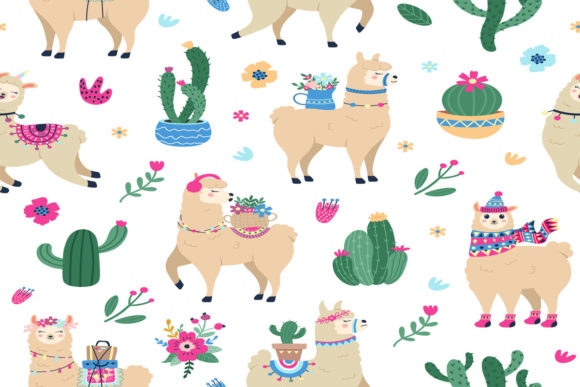
When visual assets align with intention—not just aesthetics—they become decision-making tools. The Llama and Cactus Pattern is one such asset: a cohesive, culturally resonant illustration set that blends South American iconography with functional design utility. It’s not merely decorative. It’s a deliberate bridge between regional identity, audience resonance, and practical execution—especially for creators building brands, educational materials, marketing campaigns, or product experiences rooted in Latin American themes, sustainability narratives, or desert-inspired minimalism.
What This Pattern Actually Offers—and Why That Matters
The Llama and Cactus Pattern delivers two core components in one package: an EPS10 vector file for scalability and precision, and a 72ppi JPEG preview for quick reference or low-fidelity mockups. That technical structure signals intent—it’s built for real-world use, not just inspiration boards. The EPS10 file ensures crisp reproduction across print (packaging, signage, apparel) and digital interfaces (websites, apps, presentations), while the JPEG allows immediate integration into early-stage planning—wireframes, pitch decks, or client feedback loops—without compromising workflow speed.
More importantly, the pattern’s composition is strategic. Llamas and cacti aren’t randomly paired; they share ecological, cultural, and symbolic ground—adaptability, resilience, groundedness, quiet strength. That cohesion supports messaging consistency. A wellness brand using this pattern isn’t just “adding South American flair”; it’s reinforcing values like endurance and natural harmony. An educator designing bilingual STEM resources can use the motif to anchor lessons in real-world biomes—Andean highlands and arid deserts—making abstract concepts tactile and memorable.
Where Intentional Use Creates Real Leverage
Think of the Llama and Cactus Pattern as a multiplier—not a starting point. Its value emerges when matched to clear goals:
- Brand Positioning: For small businesses entering markets where authenticity matters (e.g., eco-conscious apparel, artisanal food, travel services), this pattern signals cultural respect—not appropriation—when used alongside accurate storytelling, local partnerships, or Spanish-language content.
- Learning & Communication Design: Educators and instructional designers report stronger engagement when visual motifs reflect students’ lived environments. A math worksheet themed around cactus growth rates or llama caravan logistics becomes more than practice—it becomes contextualized learning.
- Operational Efficiency: Freelancers and agencies often juggle tight timelines. Having a production-ready, scalable pattern reduces time spent sourcing, editing, or licensing alternatives—freeing mental bandwidth for higher-level strategy, like message refinement or user testing.
- Customer Experience Consistency: From email headers to packaging inserts, repeating this pattern across touchpoints builds subconscious recognition. But only if applied with restraint—once or twice per interface, not as background noise.
When—and How—to Deploy It With Discipline
Timing matters more than frequency. The Llama and Cactus Pattern works best at decision points—not decoration points. Ask yourself before inserting it:
- Does this support a defined outcome? Example: You’re launching a line of reusable water bottles targeting outdoor educators. Using the pattern on product labels reinforces your “desert-to-mountain” sustainability story—directly supporting purchase rationale.
- Is the context culturally aligned—or does it risk flattening complexity? Avoid pairing it with generic “Latin vibes” music or stereotyped color palettes. Instead, let the pattern sit beside authentic photography, indigenous language snippets, or references to specific regions (e.g., Atacama Desert, Peruvian Altiplano).
- Will it scale meaningfully? The EPS10 file lets you enlarge it for wall graphics or shrink it for social avatars—but test legibility at smallest sizes. A cactus silhouette loses impact at 16px; a simplified llama outline may hold up better.
Also consider placement hierarchy. In digital design, patterns work strongest as subtle texture behind primary content—not competing with text or CTAs. In print, they shine as borders, section dividers, or foil-stamped accents on premium packaging. Random repetition dilutes meaning; intentional framing amplifies it.
Risks of Using It Without Context
Without grounding in purpose, even well-designed assets backfire. The Llama and Cactus Pattern carries implicit associations—and misalignment creates friction:
- Brand Dilution: Slapping it onto a fintech dashboard with no thematic connection confuses users. They don’t see “innovation”—they see visual clutter. Clarity suffers; trust erodes.
- Cultural Misstep: Llamas hold deep significance in Andean cosmology; cacti represent survival in harsh conditions. Using them as whimsical doodles—without acknowledging that weight—can alienate audiences who recognize those layers.
- Technical Limitation Blind Spots: Relying solely on the 72ppi JPEG for print leads to pixelation. Assuming the EPS10 is editable in non-vector software (like Canva or basic photo editors) causes frustration. Knowing your tools—and their limits—is part of strategic use.
Practical Integration Tips for Real Workflows
You don’t need to overhaul your process to benefit from the Llama and Cactus Pattern. Start small, then scale deliberately:
- For Marketers: Use the JPEG preview to build three consistent social post templates (Instagram carousel, LinkedIn banner, Pinterest pin). Keep copy focused on outcomes (“How this pattern reflects our commitment to sustainable sourcing”)—not just visuals.
- For Educators: Import the EPS10 into free tools like Inkscape or Google Slides (via SVG conversion) to create custom worksheet borders or quiz headers. Pair each visual with a short cultural note—e.g., “Llamas have been pack animals in the Andes for over 6,000 years.”
- For Small Business Owners: Apply the pattern to one high-impact physical item first—like thank-you cards or shipping tape. Measure response: Do customers mention the design? Does it spark conversation on social media? Let data—not assumption—guide broader rollout.
- For Freelancers: Bundle the pattern with usage guidelines in your deliverables: “Use at 10–15% opacity as background texture; avoid placing over body text smaller than 14pt.” Clear boundaries prevent client misuse and reinforce your expertise.
Long-Term Value Beyond the First Project
Assets like the Llama and Cactus Pattern gain compound value when treated as modular, adaptable elements—not one-off downloads. Save the EPS10 in your master brand library. Create variations: extract individual cacti for icons, isolate llama silhouettes for infographics, or recolor sections to match seasonal campaigns. Each reuse strengthens visual continuity—and reduces future design debt.
More importantly, it invites reflection. Every time you reach for this pattern, ask: What am I communicating beyond the surface? Is this helping my audience understand, remember, or act—or am I just filling space? That discipline separates tactical execution from strategic advantage.
Ultimately, the Llama and Cactus Pattern succeeds not because it’s visually pleasing, but because it’s functionally precise, culturally aware, and technically reliable. When matched to thoughtful goals, it supports clarity—not confusion; connection—not cliché; and results—not just repetition.