Leaves Seamless Pattern Design: A Versatile Digital Asset for Spring-Themed Creative Projects
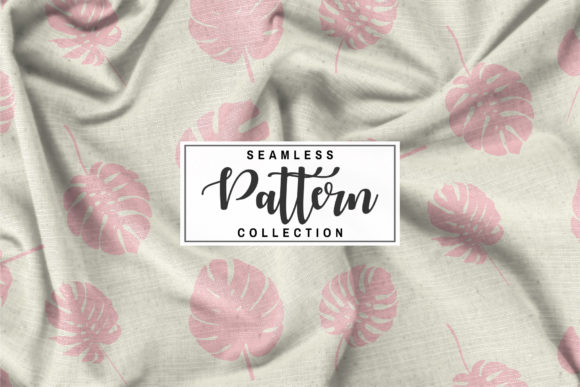
Seamless pattern design bridges aesthetics and functionality—especially when rooted in nature-inspired motifs. Among the most adaptable and widely adopted visual resources today is the Leaves Seamless Pattern Design: a vector-based, geometric interpretation of foliage that merges botanical charm with modern precision. Unlike static illustrations or raster-only assets, this digital product delivers editable scalability, color flexibility, and contextual versatility—making it indispensable across event planning, print production, digital publishing, and personal craft workflows.
What Makes This Pattern Distinctive?
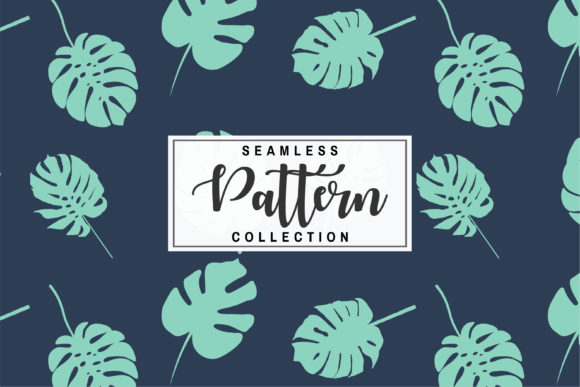
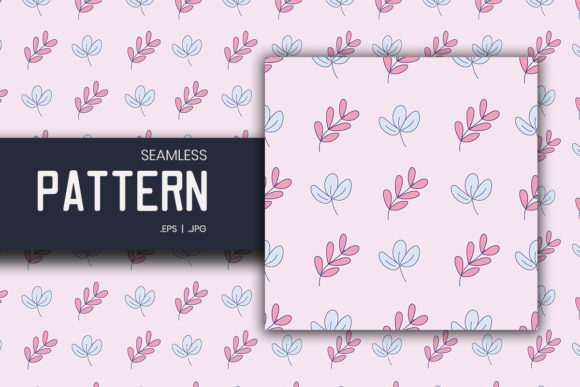
At its core, the Leaves Seamless Pattern Design is not merely a repetition of leaf silhouettes. It’s a carefully constructed geometric composition—each element calibrated for balance, rhythm, and visual rest. The leaves are stylized with clean lines, subtle curvature, and consistent negative space, enabling them to tile infinitely without visible seams or alignment artifacts. This technical rigor matters: poorly constructed patterns fracture at edges, disrupt print bleed zones, or distort when scaled—issues absent here due to intelligent anchor placement and path optimization.
The “cute spring backgrounds” referenced aren’t decorative afterthoughts—they’re intentional tonal anchors. Soft gradients, gentle pastel overlays, and light texture layers are embedded as non-destructive layers in the .Ai file, allowing users to toggle, adjust opacity, or remove them entirely. This means the same base pattern can evoke a delicate garden wedding invitation or an energetic children’s birthday banner—simply by modifying background intensity or hue saturation.
Editable Vector Format: Why File Type Matters
The inclusion of both .eps and .Ai files isn’t just standard practice—it reflects thoughtful asset architecture. Adobe Illustrator (.Ai) preserves layer structure, text editability, and appearance attributes (like gradients and blends), while .eps ensures broad compatibility with older prepress systems and third-party vector editors like CorelDRAW or Affinity Designer. Both formats retain full scalability: whether enlarging the pattern to cover a 6-foot-wide event backdrop or shrinking it to frame a 2-inch square RSVP card, resolution remains crisp and edge fidelity uncompromised.
The accompanying high-resolution .jpg file on white background serves a complementary purpose—not as a substitute, but as a ready-to-use fallback. Designers needing quick mockups, social media previews, or client presentations can drop the JPG into layouts without opening Illustrator. Its clean white base ensures immediate contrast against dark UI elements or printed paper stocks, eliminating time spent masking or erasing backgrounds manually.
Real-World Applications Across Contexts
Practical utility defines this Leaves Seamless Pattern Design—not abstract potential. Below are concrete use cases where its structure directly solves common creative challenges:
- Wedding Stationery: Used as a border motif on save-the-date cards, the pattern frames typography without competing for attention. Its organic geometry complements script fonts while remaining legible at small sizes—unlike dense floral repeats that blur when reduced.
- Anniversary Posters: When layered over a soft-focus photo of the couple, the pattern acts as a subtle texture overlay—adding depth without obscuring emotion. Designers report using blending modes like “Multiply” or “Overlay” in Illustrator to integrate the vector seamlessly into photographic compositions.
- Birthday Banners: For children’s parties, the “cute” spring aesthetic shines when recolored in mint, coral, or buttercup yellow. Because all leaves reside on separate, named layers, swapping hues takes seconds—not minutes—via Illustrator’s Recolor Artwork tool.
- Scrapbook Elements: Hobbyists cut individual leaves from the pattern using die-cut machines or digital cutting software (Cricut Design Space, Silhouette Studio). The vector paths export cleanly, avoiding jagged edges common with low-DPI JPGs.
- Digital Invitations: Email or web-based invites benefit from lightweight SVG exports derived from the .Ai file. Since the pattern is built with minimal anchor points and no raster effects, exported SVGs remain under 80 KB—even with complex tiling—ensuring fast load times and mobile responsiveness.
User-Centered Workflow Integration
Professionals and hobbyists alike prioritize efficiency. This Leaves Seamless Pattern Design supports iterative work without friction. Consider a graphic designer preparing a suite of materials for a spring-themed corporate retreat:
- They open the .Ai file and isolate the background layer, reducing its opacity to 15% for a whisper-thin texture behind keynote slide headers.
- Using the Pathfinder panel, they unite select leaves into a custom monogram frame—preserving stroke weight consistency across all elements.
- They export a cropped section as an SVG for the event’s registration webpage, then repurpose the full tile as a repeating background in InDesign for printed programs.
- For social media teasers, they place the .jpg version over a gradient mesh background, applying a subtle Gaussian blur to simulate depth-of-field—achieving a polished look in under five minutes.
No external plugins, font dependencies, or license restrictions interfere. And because there’s no watermark in any downloaded file, final deliverables maintain professional integrity—critical for agencies submitting to brand guidelines or educators distributing classroom materials.
Technical Considerations for Optimal Use
While intuitive, maximizing this asset requires awareness of a few practical constraints:
- Color Mode Consistency: The .Ai file defaults to RGB—ideal for digital use—but should be converted to CMYK before sending to commercial printers. Illustrator’s “Convert to Profile” function handles this cleanly, preserving perceptual relationships between greens and neutrals.
- Tile Dimensions: The repeat unit measures 1200 × 1200 pixels at 300 PPI, aligning with standard poster and banner templates. Users scaling beyond 4× life-size should expand the artboard first—not just the pattern fill—to avoid interpolation artifacts.
- Layer Naming Conventions: Backgrounds, leaves, and accent stems are labeled descriptively. Renaming layers before extensive edits prevents confusion during collaborative handoffs or version updates.
- Font Independence: No live text appears in the base file—so no risk of missing fonts disrupting layout integrity. Any typography added later remains fully editable and export-ready.
Who Benefits—and How
This Leaves Seamless Pattern Design resonates across diverse roles—not because it’s “for everyone,” but because its architecture anticipates distinct needs:
Small Business Owners use it to unify branding across seasonal promotions—applying the same leaf rhythm to email headers, Instagram story highlights, and in-store signage without commissioning custom illustrations each time. One user reported cutting design time per campaign by 60% after integrating the pattern into their Canva Brand Kit.
Educators leverage the editable vectors in design literacy lessons: students dissect the pattern’s symmetry, measure repeat intervals, or experiment with color theory by reassigning HSL values to individual leaf groups. Its clarity makes abstraction tangible—especially for learners new to vector concepts.
Hobbyist Crafters appreciate the absence of licensing ambiguity. Whether printing fabric transfers for handmade napkins or laser-cutting wooden coasters, the unencumbered usage rights mean no attribution requirements or platform-specific restrictions. That freedom fosters experimentation—not hesitation.
Researchers in Visual Communication cite such patterns in studies on perceptual fluency: how predictable yet varied organic geometry enhances viewer retention in informational graphics. The measured irregularity of leaf angles here—neither rigidly uniform nor chaotically random—supports cognitive ease without sacrificing visual interest.
Evolving With Creative Practice
Patterns like this reflect broader shifts in digital asset expectations: away from isolated visuals toward interoperable, context-aware components. The Leaves Seamless Pattern Design doesn’t ask users to adapt to its limitations; instead, it yields to their intent—whether that’s refining a single stem’s curve, exporting a sub-section as a PNG mask, or scripting batch color swaps via Illustrator’s ExtendScript toolkit.
Its longevity lies not in trendiness, but in foundational soundness. Geometric leaves resist rapid stylistic obsolescence—their structure echoes mid-century botanical diagrams, Japanese textile motifs, and contemporary data visualization alike. That cross-temporal resonance ensures relevance whether deployed in a 2024 graduation announcement or a 2030 sustainability report.
Ultimately, this isn’t just about leaves. It’s about giving creators a reliable, silent collaborator—one that handles repetition so they can focus on meaning, emotion, and intention. When the technical execution disappears into the background, what remains is clarity: of purpose, of audience, and of expression.