Heart Pattern: A Versatile Design Choice for Creative Projects
A Heart Pattern is more than a decorative motif—it’s a foundational visual element with broad functional and aesthetic utility. At its core, it’s a repeating or standalone arrangement of heart-shaped forms, often stylized to balance recognizability with design flexibility. Unlike rigid clipart or overly literal illustrations, a well-executed Heart Pattern maintains visual rhythm while allowing adaptation across scales, colors, and contexts. Its enduring appeal lies in emotional resonance—conveying warmth, affection, care—without requiring explicit narrative. That subtlety makes it especially valuable for projects where tone matters but overt messaging doesn’t.
What Sets This Heart Pattern Apart: The Power of Transparency
This particular Heart Pattern is delivered as a 1 PNG file—specifically, a high-resolution image with no background. That means the hearts appear on a fully transparent canvas, not white, black, or any solid color. This isn’t just a technical detail; it’s a functional differentiator. A transparent PNG preserves clean edges, supports anti-aliased curves, and enables seamless integration into layered digital workflows—whether you’re designing fabric repeats in Adobe Illustrator, preparing print-ready greeting card layouts in Affinity Publisher, or building web graphics with CSS background overlays.
By contrast, PNGs *with* backgrounds (even subtle ones) limit flexibility. A white-background version may clash with light-colored fabrics or pastel stationery. A black-background variant can’t be used directly on dark substrates without manual editing. A transparent file removes that bottleneck: you decide the context—not the image.
Practical Use Cases: Where Transparency Adds Real Value
The versatility of a transparent Heart Pattern becomes especially clear when evaluating real-world applications:
- Fabric printing: When creating custom textiles—like cotton duvet covers or polyester scarves—the pattern must align precisely across seams and repeat cleanly. A transparent PNG allows designers to place hearts over gradient dye effects, textured base colors, or even photographic underlays without visible borders or mismatched edges.
- Greeting cards and stationery: Handmade or digitally printed cards often layer patterns over watercolor washes, foil accents, or letterpress textures. A transparent Heart Pattern integrates naturally, letting underlying materials show through while maintaining crisp definition.
- Home décor items: For door curtains, throw blankets, or pillowcases, background-free assets let you test how the pattern interacts with ambient lighting, room color schemes, and adjacent furnishings—before committing to production.
- Digital presentations and branding: Presenters using the pattern in slides or social media banners benefit from consistent scaling and cropping freedom. No need to mask or erase backgrounds mid-edit.
Comparing Formats: Why Not Just Use SVG or JPEG?
It’s worth considering alternatives—not because they’re inferior, but because each serves distinct needs. An SVG version of a Heart Pattern offers infinite scalability and smaller file sizes for web use, but requires vector editing knowledge and may not render consistently across older email clients or certain print RIPs. A JPEG is widely compatible but loses fidelity when enlarged and cannot support transparency—making it unsuitable for layered compositing.
A PNG strikes a pragmatic middle ground: it retains pixel-perfect clarity at common output resolutions (e.g., 300 DPI for print, 72–150 DPI for digital), supports alpha channels natively, and opens reliably in nearly every image editor—from free tools like GIMP and Photopea to professional suites like Photoshop and Affinity Photo. For users who prioritize reliability over ultra-high-res scalability—or who work across both digital and physical outputs—a PNG remains a balanced, broadly supported choice.
Design Considerations: Scale, Spacing, and Stylistic Fit
Not all Heart Patterns function equally across applications. Key variables include:
- Repeat structure: Is the pattern tileable? Does it use seamless offset repetition or a grid-aligned layout? Seamless tiling is essential for fabric or wallpaper; non-repeating versions suit single-use items like gift tags or monogrammed towels.
- Line weight and negative space: Delicate outlines may disappear on coarse-weave fabrics or low-DPI prints. Bolder, slightly simplified hearts hold up better across diverse substrates.
- Stylistic tone: A minimalist, geometric Heart Pattern reads differently than one with hand-drawn texture or vintage linocut grain. Choose based on audience expectations—e.g., modern nursery bedding benefits from clean lines; artisanal soap packaging may pair better with organic, uneven strokes.
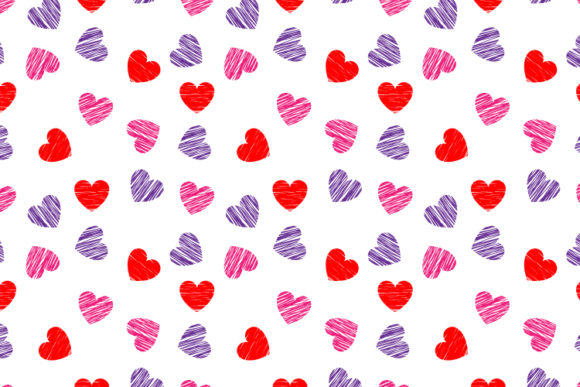
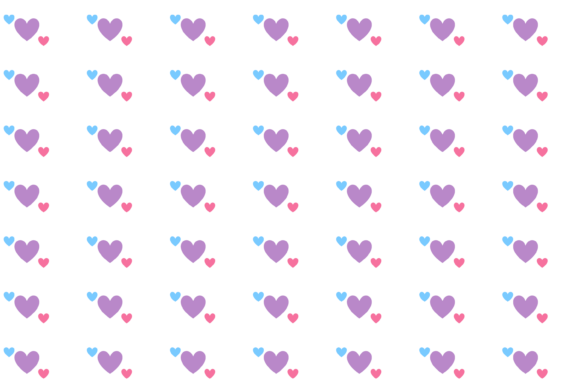
This Heart Pattern appears intentionally refined: balanced spacing, consistent stroke weight, and moderate complexity. It avoids excessive ornamentation that could hinder reproduction on textured surfaces, yet retains enough character to feel intentional—not generic.
When a Transparent Heart Pattern Is the Right Choice—and When It Might Not Be
A transparent Heart Pattern excels when you need adaptability across multiple outputs, plan to adjust background colors or textures frequently, or lack access to vector-editing tools. It’s ideal for small-batch creators, educators designing classroom materials, or hobbyists experimenting with DIY crafts.
However, it may be less optimal in specific scenarios:
- Large-scale commercial printing: If you’re producing thousands of yards of fabric, a vector-based repeat (e.g., AI or EPS) often provides greater precision for color separation and screen calibration.
- Animated or interactive media: For web banners or app interfaces requiring responsive resizing or hover effects, SVG or CSS-generated shapes offer smoother performance.
- Highly detailed customization: If you regularly modify individual hearts—changing fill per shape, adding gradients, or applying distortion effects—a vector source gives finer control than raster pixels.
None of these limitations diminish the value of the PNG format—they simply clarify scope. Think of it as a reliable, ready-to-deploy asset rather than a master production file.
Making the Most of Your Heart Pattern Asset
To maximize utility, consider these practical steps after download:
- Test at scale: Open the PNG in your preferred editor and enlarge it to 200–300%—check for pixelation or soft edges. A well-prepared file should remain sharp.
- Simulate substrates: Place it over swatches of fabric photos, paper textures, or wall colors to preview how contrast and mood shift with background choices.
- Adjust color non-destructively: Use layer blending modes (e.g., Multiply for dark bases, Screen for light ones) or hue/saturation adjustments instead of repainting—preserving the original transparency.
- Respect licensing terms: Confirm whether personal, commercial, or extended use is permitted—especially if distributing finished products like printed stationery or embroidered goods.
Finally, remember that pattern effectiveness isn’t only about technical quality—it’s about alignment with intent. A Heart Pattern used thoughtfully on a condolence card carries quiet empathy. On a baby shower banner, it signals tenderness. On a wellness brand’s packaging, it suggests compassion. The transparency doesn’t dilute that meaning—it expands the ways it can be expressed.
Thank you for visiting my shop. Have a nice day.