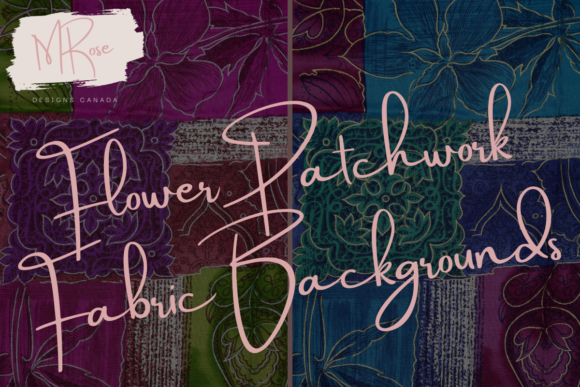
Flower Patchwork Fabric: A Thoughtful Choice for Quilt Makers and Textile Designers
Flower Patchwork Fabric refers to digitally designed fabric patterns that feature stylised floral motifs arranged in repeating, interlocking, or tessellated layouts—intended specifically for patchwork, quilting, and surface design applications. Unlike printed cottons with isolated floral prints or all-over botanical textures, Flower Patchwork Fabric is structured to support precise seam alignment, consistent scale across blocks, and intentional colour transitions between adjacent pieces. It’s not a physical bolt of cloth—it’s a high-resolution digital file, ready for printing on your preferred substrate (cotton, linen-cotton blends, or even lightweight canvas) using home inkjet printers or professional textile printing services.
What Sets Flower Patchwork Fabric Apart
The defining trait of Flower Patchwork Fabric lies in its functional geometry. Each design is built around modular units—often squares, hexagons, or diamonds—that contain balanced floral elements. Petals, stems, and leaves are placed so that when multiple units are stitched together, the motifs visually flow across seams rather than stopping abruptly at block edges. This creates continuity without requiring complex fussy cutting or custom piecing. In contrast, standard floral quilting fabrics often rely on random placement or directional repeats that don’t account for seam allowances or block symmetry. That makes them better suited for background fills or standalone appliqué—not structured patchwork.
Another key distinction is colour intentionality. Flower Patchwork Fabric is offered in both dual-coloured and single-coloured variants—not as arbitrary choices, but as functional adaptations. Dual-coloured versions use two carefully calibrated hues (e.g., sage green + cream, indigo + oat, terracotta + ivory) to create visual rhythm and depth while preserving clarity across small-scale blocks. Single-coloured versions rely on tonal variation—light-to-dark gradients within one hue—to add dimension without introducing chromatic complexity. This matters especially for beginners or those working on large-format quilts where managing more than two dominant colours can quickly lead to visual fatigue or unintended clashes.
Comparing Approaches: Digital Patterns vs. Physical Pre-Cuts
Many quilters begin with pre-cut fabric bundles—jelly rolls, layer cakes, or charm packs—featuring coordinated florals. These offer convenience and tactile assurance, but they limit flexibility. You’re bound by fixed sizes, predetermined colour pairings, and the manufacturer’s interpretation of “harmony.” With Flower Patchwork Fabric, you retain full control over scale, saturation, and layout. You decide whether a 6-inch block reads as bold or delicate; whether a border flows seamlessly into the centre; whether your quilt tells a story through subtle tonal shifts or confident contrast.
That said, digital files demand a different kind of preparation. You’ll need access to a reliable printer (preferably with pigment inks for wash-fastness), knowledge of fabric printing settings (such as mirror mode for iron-on transfers, or direct-to-fabric calibration), and comfort adjusting DPI and bleed margins. If your workflow centres on hand-dyeing, batik, or vintage fabric repurposing, Flower Patchwork Fabric may sit outside your current toolkit—not because it’s inferior, but because it serves a different phase of the creative process: intentional, repeatable, scalable composition.
When Dual-Coloured Patterns Shine
Dual-coloured Flower Patchwork Fabric works best when clarity and contrast are priorities—think modern log cabin variations, English paper piecing hexies, or minimalist medallion quilts. The two-tone structure helps distinguish positive and negative space, making it easier to track seam lines during assembly. For example, a dual-coloured pattern in dusty rose and warm grey allows you to rotate blocks without losing orientation, while still achieving cohesion across a king-size quilt top. It also reduces the cognitive load of matching dozens of separate fabric cuts—a practical advantage when working solo or under time constraints.
Where Single-Coloured Patterns Excel
Single-coloured Flower Patchwork Fabric excels in projects where subtlety, texture, and material nuance take precedence. Imagine a wall hanging using three weights of linen—light, medium, and heavy—printed with the same floral motif in varying tones of charcoal. The repetition becomes meditative; the differences emerge through drape and light reflection, not pigment. This approach suits art quilts, heirloom baby blankets, or interior-focused pieces like pillow covers and framed textile studies. It also simplifies sourcing: if you already own a favourite solid-dye fabric, you can print directly onto it—no need to hunt for matching yardage.
Realistic Tradeoffs to Consider
Because Flower Patchwork Fabric is delivered as a digital download, there’s no shipping delay—and no physical sample to assess before purchase. That means colour accuracy depends on your monitor calibration and printer profile. A soft lavender on screen may render as slightly cooler or warmer on fabric, especially across different base materials (bleached cotton vs. unbleached linen). To mitigate this, many designers include RGB and CMYK swatches alongside recommended fabric bases—but final results remain contextual.
Refunds aren’t available, which reflects industry-standard practice for digital goods. Once downloaded, the file can’t be “returned” or re-issued. That doesn’t indicate risk—it signals responsibility. Just as you wouldn’t expect a refund for a purchased PDF pattern or embroidery design file, Flower Patchwork Fabric operates under the same logic: it’s a tool, not a consumable. If you're uncertain about compatibility with your printer or preferred fabric type, testing a small section first (a 4×4 inch tile, for instance) is a low-cost way to verify registration, bleed, and colour fidelity.
Fitting Flower Patchwork Fabric Into Your Workflow
This resource fits most naturally into intermediate-to-advanced quilting practices—especially those involving foundation paper piecing, curved piecing, or improvisational block construction. It’s less ideal for absolute beginners who haven’t yet developed confidence reading seam allowances or aligning templates. But it’s highly accessible to crafters with experience in digital design tools (like Adobe Illustrator or Affinity Designer), textile printing, or even garment sewing where precision pattern alignment is routine.
You might choose Flower Patchwork Fabric when:
- You want cohesive floral continuity across a large quilt without buying dozens of coordinating solids;
- Your project calls for exact repeat alignment—such as borders that wrap cleanly around corners;
- You prefer designing *on* fabric rather than cutting *from* fabric—giving you room to adjust placement after printing;
- You value long-term versatility: one digital file can generate yardage for multiple projects, scaled up or down as needed.
You might explore alternatives when:
- You rely heavily on tactile feedback during cutting and piecing and find digital workflows disruptive;
- Your printer isn’t calibrated for textile inks or lacks adequate resolution for fine petal details;
- You’re drawn to organic imperfection—hand-stamped florals, watercolour bleeds, or irregular dye lots—where digital precision feels at odds with your aesthetic;
- You need immediate physical material for a deadline-driven commission and can’t accommodate printing, drying, and pressing time.
Ultimately, Flower Patchwork Fabric isn’t about replacing traditional methods—it’s about expanding the range of what’s possible within them. It supports intentionality without sacrificing warmth; structure without rigidity; repetition without monotony. Whether you choose dual-coloured patterns for crisp definition or single-coloured ones for quiet sophistication, the decision hinges less on trend and more on how you want your hands—and your eyes—to move through the making process.
If you have any questions about file formats, recommended printing settings, or suitability for a specific project, please reach out to me. I’m happy to help clarify what will work best for your context.